

 4.8
4.8

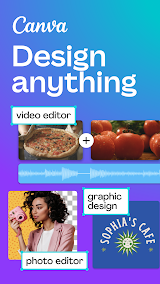




About Canva: Design, Photo & Video
Canva is a graphic design tool that democratizes the creation of visual content by using drag-and-drop functionality that is user-friendly and professional design features. Canva has expanded into more than thirty million active users about the globe since its introduction in 2013 as the most convenient design tool to a non-designer and entrepreneur without any expert training demands.
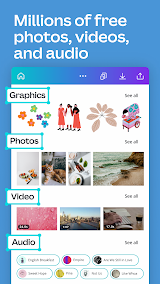
The platform is offered on a flexible freemium basis, with generous free tier access and advanced paid subscriptions for power users and organizations. Free users will get two million templates, five gigabytes of storage space, and millions of free design elements. Pro members have access to a hundred million premium templates, stock photos, illustrations, videos and a terabyte of storage to use on extensive projects. Teams plans support multiple concurrent users with administrative controls and design management priced at one hundred dollars annually per team member.
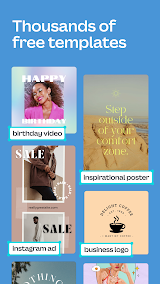
The core strength of Canva lies in its vast template library for presentations, social media graphics, business cards, posters, resumes, infographics, and print-ready materials for various business needs. It also incorporates AI; this includes Magic Write, an OpenAI-powered text generator that provides twenty-five free queries per month to any user. Magic Resize, available only to Pro users, can adapt designs to multiple dimensions for different platforms in one click, supporting up to fifty concurrent designs at the same time. This has saved designers from hours of routine formatting.
Brand Kit functionality enables organizations to maintain visual consistency across all communications and marketing materials in a systematic way. Users can upload logos in vector format, define unlimited brand colors on paid plans, load custom fonts, and store brand photographs and icons in a structured way. It accelerates design workflows through the elimination of manual formatting adjustments and color-matching errors across projects. In the free version, only a maximum of three brand color entries is supported.
It allows for real-time collaboration, enabling multiple people on the same team to edit at the same time with cursor tracking visible under one second of responsiveness consistently. Team members can assign specific roles, leave pinned comments, mention collaborators with notifications, and set up design approval workflows under Teams subscriptions to maintain quality control and manage approvals.
More distinctively, the integrated print fulfillment service is one of the key competitive differentiators setting Canva apart from its competitors. Designs become physical products through partnerships with optimized local print facilities around the world. The shipping can either be free standard shipping or expedited shipping code within three business days, and the option of picking the product in stores can be provided by FedEx Office and Staples in various locations.
Designs are analyzed with automated quality assurance to identify designs with bleed zones, image resolution requirement and text sizing to meet professional production requirements. All print orders come with a Happiness Guarantee with free reprinting for unsatisfactory results with no additional charges or questions asked.
Export flexibility extends to PNG, JPEG, GIF, MP4 video, PPTX presentations, and PDF documents for extensive use. Video exports allow for up to one gigabyte file sizes at four thousand K resolution capability, although imported videos are automatically downscaled to ten eighty pixels. Transparent background exports are restricted to Pro subscriptions only.
Performance evaluation indicates there is reliable uptime, responsive interactions with the interface, and fast processing times during peak usage periods. The platform allows absolute beginners to create professional-quality graphics within ten minutes, whereas similar work requires thirty minutes using professional design software.
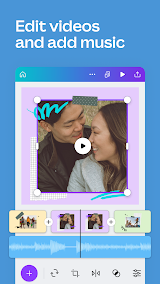
The limitations of the application are clear in comparing advanced customization options against professional design tools like Photoshop and Illustrator. Canva does not provide pixel-level accuracy while editing, and the user is limited to pre-defined elements, which can be adjusted by the user. Also, there are limits related to typography, which do not allow users to apply some gradient and other advanced adjustments. The repetition of templates presents aesthetic issues since millions of users are using them. Customer service works only through email, and no phone support is possible. No system for offline project backups is provided. Video editing is unsophisticated for complex professional work.


Features of Canva: Design, Photo & Video
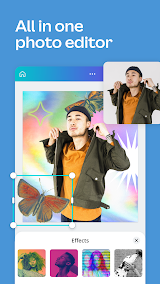
Drag-and-drop editor that allows the creation of professional designs, no technical expertise required.
Subscriptions include one hundred million premium template images, videos, and fonts.
Magic Write generates social media copy content using AI.
Instantly resize designs across fifty different platforms' dimension specifications.
Multiple users collaborate in real-time on the design, displaying each user's cursor.
Brand Kit consolidates logos, colors, fonts, and elements that ensure consistency in identity.
Template Assistant analyzes designs for print readiness resolution requirements.
Content Planner: Schedules social media posts to publishing channels.
SVG format logos allow dynamic color changes while sustaining perfect resolution quality.

Pros
Beginner-friendly interface requires zero design experience professional training skills.
Prepare professional designs within ten minutes instead of thirty minutes.
Exceptional value offering one hundred million assets fifteen dollars.
Cloud storage: Scales from five gigabytes free to one terabyte.
Real-time collaboration eliminates email exchanges, reducing revision cycles.
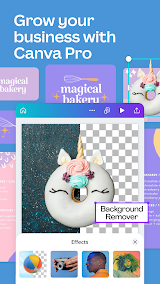
Background remover tool: unlimited usage, additional charges.
Professional print quality maintained automated proofing partnerships worldwide.
Transparent backgrounds available, enabling integration with existing design projects.
Magic Resize eliminates manual resizing work for different platform specifications.
Offline editing allows continued design work without internet connectivity.
Support for SVG format maintains maximum resolution, preventing pixelation.

Cons
No pixel level editing, thus limiting detailed design customization software.
No offline backup system for projects creates complete dependency.
Email support only without telephone assistance in emergency situations.
Workflows include frequent premium element prompts for free users.
Ratings
This number is based on download statistics from Google Play and may include historical data.