



 4
4




About Google Maps
Remaining ahead in all respects, Google Maps is the leading navigation platform in the world, operating for more than two billion users with advanced real-time directional capabilities and location discovery. Besides pure turn-by-turn navigation, this application has full-fledged business directories, integrated live traffic, augmented reality walking directions using Live View technology, and community-based reviews that play a considerable role in consumer decision-making processes worldwide. The platform is integrated well with both Android Auto and Apple CarPlay to offer completely hands-free operation during active navigation, which enhances driver safety considerably without phone distraction.
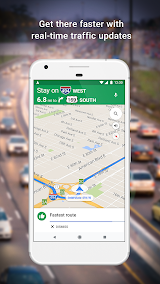
One of Google Maps' strongest differentiators is real-time traffic layer data, collected from millions of anonymized Android devices, GPS signals, and official transportation authority sensors that report conditions actively. Congestion might arise suddenly, at which point this application recalculates routes while dynamically updating arrival estimates to intelligently route drivers around accidents and construction or surprise bottlenecks that could suddenly arise on major thoroughfares. This predictive feature uses the historical traffic patterns and advanced machine learning algorithms to predict the congestion in advance before the drivers experience the actual delays hence essentially offering a significant improvement in the commuting efficiency.
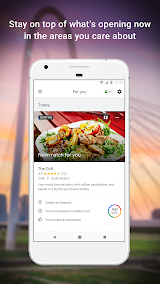
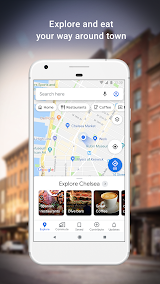
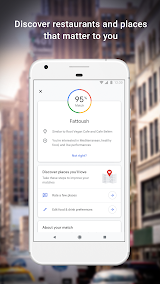
Recent integration of artificial intelligence enabled by Gemini provides "know before you go" contextual tips on restaurants, hotels, concert venues and attractions with broad local knowledge and local insights. These tips disclose intimate details such as secretly offered menu items, the best parking places, dress code policy, and strategies of making reservation bookings in fashionable restaurants across the different areas around the world. The improved Explore tab shows trending spots with curated lists by Lonely Planet, Viator and OpenTable and has personalized suggestions by influential local experts on them.
Augmented reality features have grown significantly, with Live View technology identifying buildings and landmarks through camera feeds, laying precise directional arrows onto the physical environment being viewed through the displays of smartphones quite clearly. This approach eliminates the confusion that arises when referencing abstract map representations, offering highly intuitive navigation guidance for pedestrians in specific urban neighborhoods they are unfamiliar with.
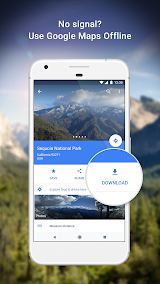
Offline functionality in Google Maps allows access to previously downloaded maps, thereby allowing the ability to view locations and discover businesses without internet connectivity during extensive travels in remote areas. This functionality does come with major limitations: it's not possible to calculate new directions offline, access real-time traffic updates, or explore options provided in public transit routing without continuous data services. Downloaded maps expire after twelve months and require internet connectivity to refresh data sources appropriately.
The saved places organization system will allow the users to create any number of custom lists based on categories, destinations, or travel preferences to use in the future and plan their wars. The users have the option of adding customized notes, ratings, and photos to a specific location, and this easily synchronizes with all the devices they are connected to.
Nevertheless, the less-developed areas and heavily populated urban centers continue to experience persistent accuracy problems of the GPS signals that can be seen to reflect unpredictably around tall buildings and skyscrapers. The coverage of Street View remains incomplete across whole continents, especially in Africa and Central Asia, while documented gaps even appear in well-populated neighborhoods of major cities. At times, the platform directs drivers toward incomplete roads, nonexistent addresses, and genuinely dangerous routes. Frequently, user-submitted corrections get automatically rejected by moderation systems despite their factual accuracy and thorough documentation.


Features of Google Maps
Live Traffic Viewing of network congestion indicators in the form of color-coded maps.
Directional arrows overlaid on real physical environment as an augmented reality.
The AI rerouting is calculated automatically whenever traffic congestion occurs to calculate alternative routes.
Immersive View brings together Street View imagery, aerial photography, and live weather
Business directory of millions of locations with detailed user ratings and reviews
Offline map downloading allowing navigation without continuous internet connectivity covered
Location sharing-tracking real-time positioning with designated family and friends
Voice-based incident reporting allowing drivers to verbally describe accidents, without manual entry.
Accessible route planning identifying pathways specifically avoiding stairs and challenging terrain
Artificial intelligence-based prediction for available EV chargers utilizing historical charging profiles.

Pros
Live traffic integration: It reduces commute time by dynamically optimizing routes.
Augmented reality gets rid of navigation confusion by showing arrows within the physical environment.
Offline maps allow searching for locations without expensive international roaming charges being incurred.
System for saved places allows the user to create unlimited custom lists, making the process of trip planning simpler-especially in regards to multi-destination trips.
Real-time incident alerting: drivers are immediately notified of road closures and hazards.
Business review aggregation provides complete community feedback about restaurant service quality.
Location sharing monitors family members in case of any emergencies while traveling and provides instant reassurance.
EV charger predictions prevent wasted time finding charging stations with no available equipment
Immersive View routes combine multiple perspectives to provide photorealistic visual journey preview opportunities.
Gemini AI tips show insider information on restaurant menus, parking, and reservations.
Accessible route planning seeks out walker-friendly pathways that avoid difficult terrain and stairs.

Cons
GPS accuracy often fails in highly dense urban areas with tall building obstruction.
Street View coverage is still incomplete on whole continents, especially Africa and Central Asia.
Offline directions require internet connectivity route generation cannot be done during complete network unavailability.
Suggested routes often prioritize unusual pathways over intuitively obvious direct established routes
Lane guidance accuracy frequently fails, misleading drivers about intersections where turns are required.
User corrections, even though factually correct, are automatically rejected, leading to persistent mapping errors.
Sometimes routes are taken through hazardous roads and cliffs, which pose a real threat to the safety of the driver.
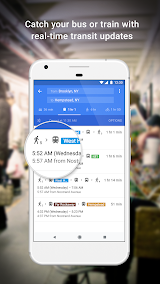
Public transit data needs full internet access to prohibit planning offline transportation.
Outdated business listings display permanently closed locations confusing customers trying to search the location.
Address standardization inconsistencies create location duplicate entries confusing interpretation search results.
Ratings
This number is based on download statistics from Google Play and may include historical
data.